
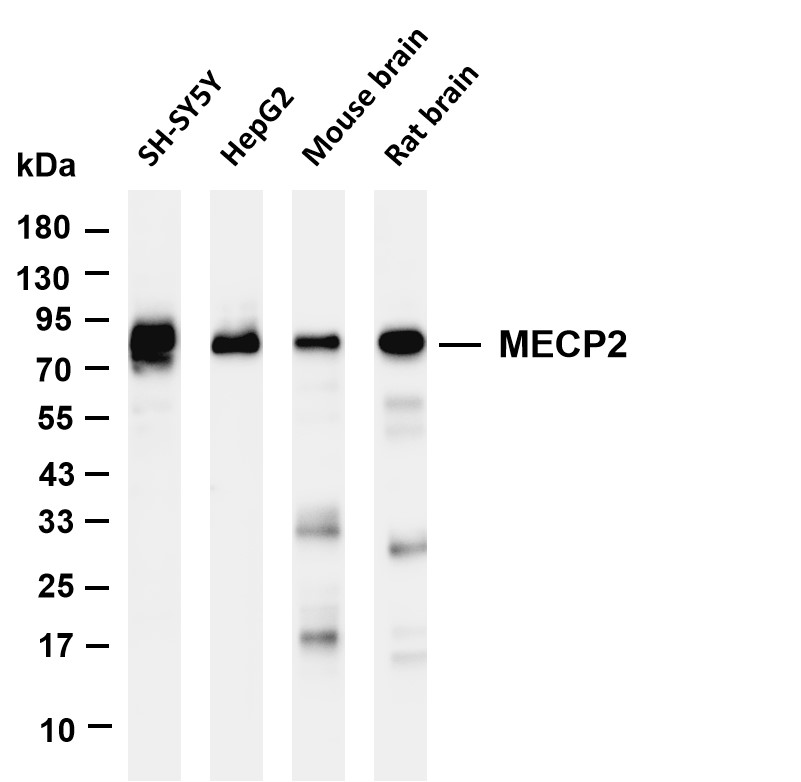
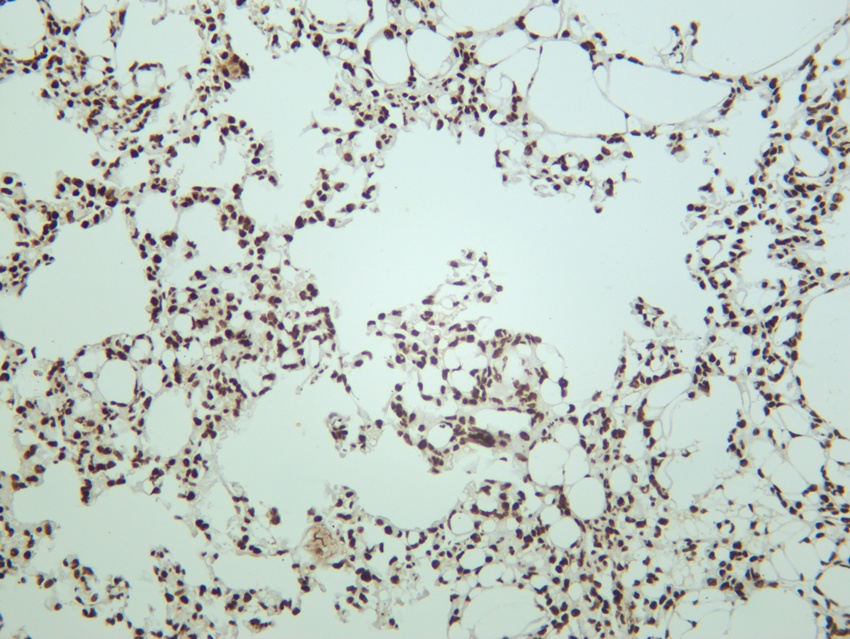
| Product Name | GPER1 Rabbit mAb |
| Background | This gene is a member of the G-protein coupled receptor 1 family and encodes a multi-pass membrane protein that localizes to the endoplasmic reticulum. The protein binds estrogen, resulting in intracellular calcium mobilization and synthesis of phosphatidylinositol 3,4,5-trisphosphate in the nucleus. This protein therefore plays a role in the rapid nongenomic signaling events widely observed following stimulation of cells and tissues with estrogen. Alternate transcriptional splice variants which encode the same protein have been characterized. [provided by RefSeq, Jul 2008] |
| Reactivity | Human, Mouse, Rat |
| Source | Rabbit, IgG Kappa |
| Applications | WB; IHC; IF; IP; ELISA |
| Dilutions | WB: 1:2000-1:10000; IHC: 1:1000-1:5000; IF: 1:200-1:1000; IP: 1:50-1:200; ELISA: 1:5000-1:20000 |
| Purification | Protein A |
| Formulation | PBS, 50% glycerol, 0.05% Proclin 300, 0.05%BSA |
| Storage and Stability | -20°C/1 year |
| MW (kDa) | Calculated: 42; Observed: 55 |
| UniProt Accession # | Q99527 |
| Protein Name | GPER1 |
| Gene Name | GPER1 |
| Gene ID | 2852 |
| Other Names | Chemoattractant receptor-like 2; Flow-induced endothelial G-protein coupled receptor 1 (FEG-1); G protein-coupled estrogen receptor 1; G-protein coupled receptor 30; GPCR-Br; IL8-related receptor DRY12; Lymphocyte-derived G-protein coupled receptor (LYGPR); Membrane estrogen receptor (mER) |