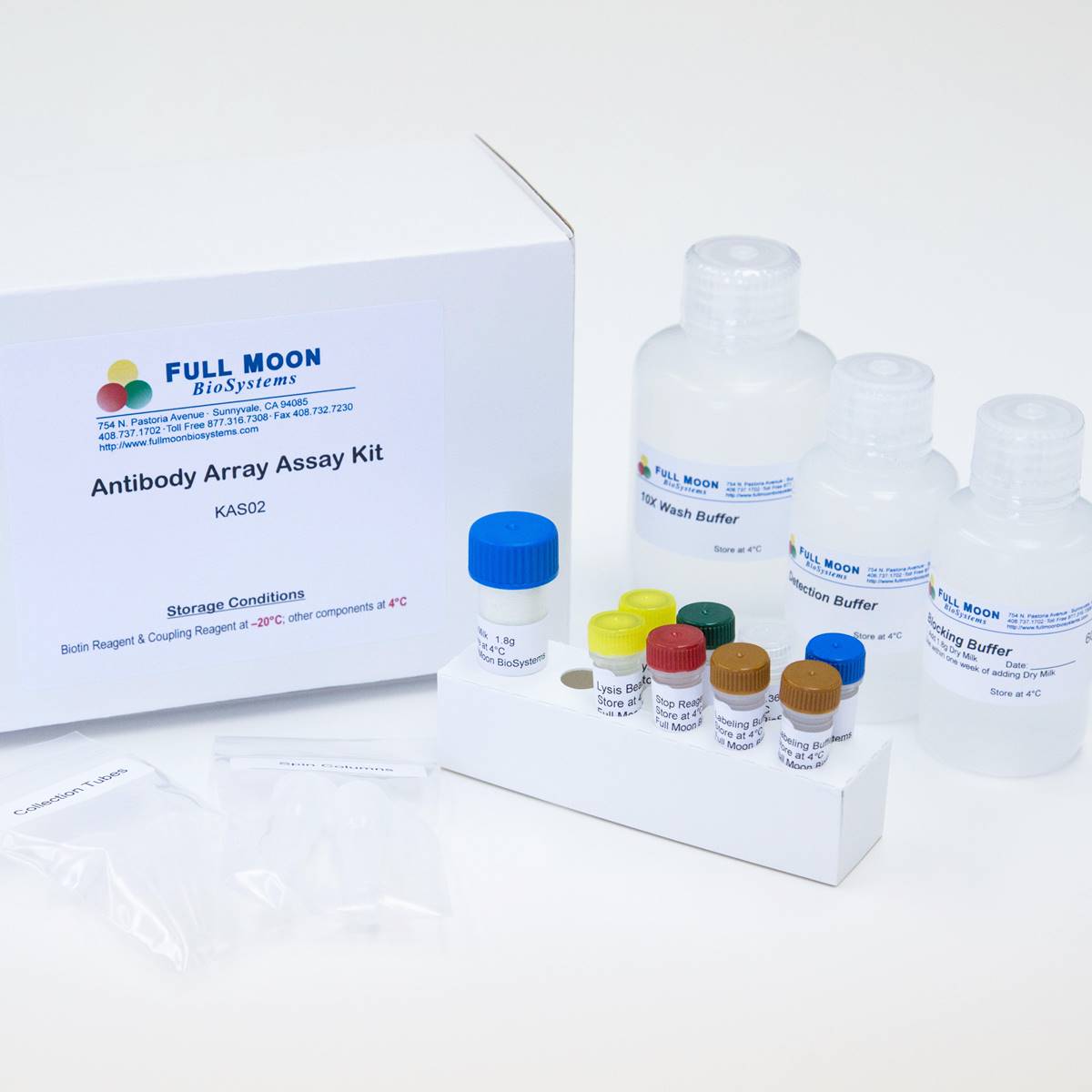
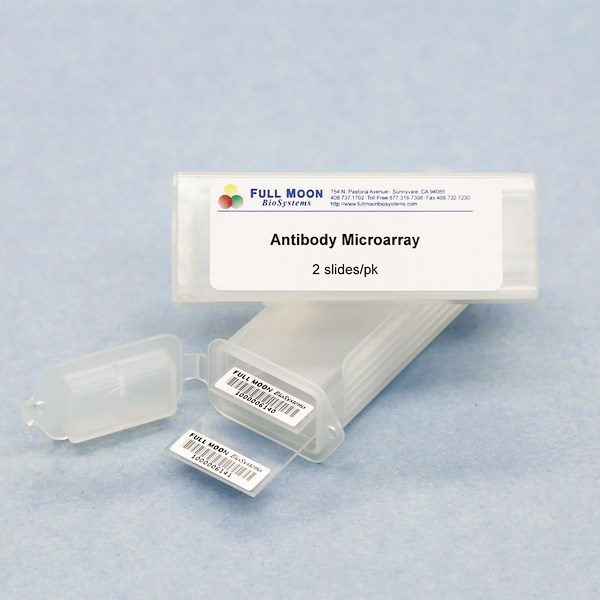
WHAT WE OFFER
We simplify your protein phosphorylation research by managing the complete phosphorylation profiling workflow with the Insulin Receptor Phospho Antibody Array:
Sample Processing
Send your cell lysates or protein extracts to us, and our experienced technicians will take care of all sample preparation steps according to Full Moon BioSystems’ validated protocols.
Assay Execution
We perform the complete lysate preparation, labeling, incubation, and detection process using the Insulin Receptor Phospho Antibody Array, ensuring high sensitivity and specificity for phosphorylated and total protein targets.
Imaging & Data Analysis
Our lab uses high-resolution microarray scanners and advance software tools to extract and analyze fluorescent signals from array images. Each spot is carefully examined to verify signal quality, consistency, and accuracy across the array.
This combined computational and expert-reviewed approach ensures high-confidence, reproducible results. We focus on delivering clean, reliable data that reflects true biological differences. This rigorous quality control process ensures that only high-confidence data are carried forward for interpretation.
Final Report Delivery
Upon completion of the assay and analysis, results are delivered in Excel format with clearly structured data. Each report includes:
-
Mean signal intensity of all replicate spots for each antibody
-
Coefficient of variation (CV) for replicate spots to assess signal consistency
-
Normalized signal intensities
-
Fold change calculations between control and. treatment samples
-
Ratios of phospho-antibody signals to their corresponding non-phospho antibody signals, providing insight into phosphorylation status relative to total protein levels
- Sample Assay Results
-
Protein phosphorylation profiling
-
Biomarker profiling
-
Cancer and drug target discovery
-
Signal pathway research
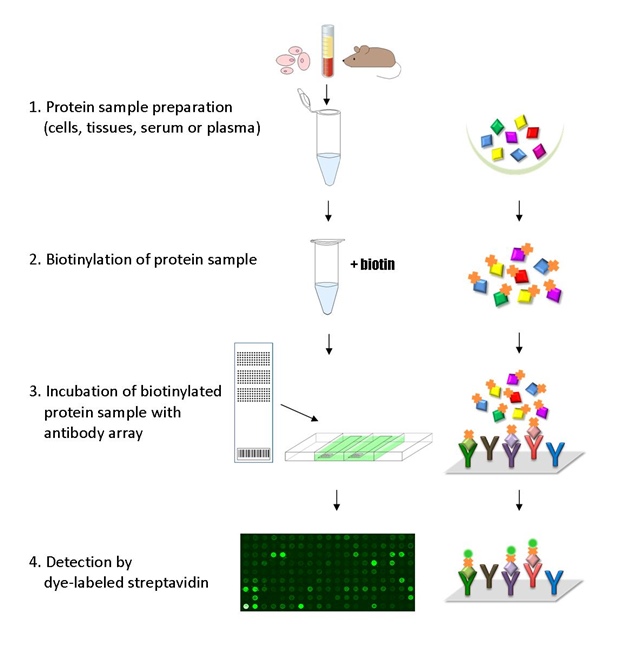
The ELISA based Phospho Explorer Antibody Array platform involves four major steps:
- Protein extraction with non-denaturing lysis buffer
- Biotinylation of protein samples
- Incubation of labeled samples with antibody array
- Detection by dye conjugated streptavidin
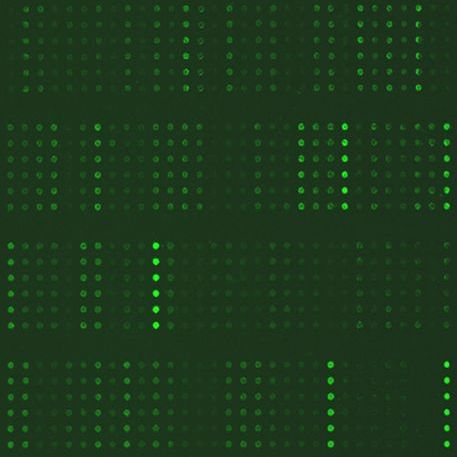
This array features 219 site-specific and phospho-specific antibodies. Each antibody is printed with six replicates.
Antibody Reactivity: Human: 100% | Mouse: 97% | Rat: 84%
Selected Targets:
4E-BP1 (Thr36), AKT (Thr308),AKT2 (Ser474), AMPK1 (Thr174), BAD (Ser112), CBL (Tyr700), eIF4B (Ser422), ERK8 (Thr175/Tyr177), FKHRL1 (Ser253), FOXO1A (Ser329), GRB2 (Ser159), GSK3a/b (Tyr216/279), IKKa (Thr23), IKKb (Tyr199), IR (Tyr1355), IR (Tyr1361), IRS-1 (Ser1101), IRS-1 (Ser612), LKB1 (Ser428), MEK1 (Ser298), mTOR (Ser2448), ERK1-p44/42MAPK (Tyr204), p70S6K (Ser418), PDK1 (Ser241), PKA CAT (Thr197), PKC theta (Thr538), PP1a (Thr320), PP2A-a (Tyr307), PTEN (Ser370), RASF4, SHP-2 (Tyr542), Tuberin (Thr1462), and more.
Fischer HJ, Sie C, The Insulin Receptor Plays a Critical Role in T Cell Function and Adaptive Immunity, J Immunol. 2017 Mar 1;198(5):1910-1920
He H, Zong Y, Sensing the Insulin Signaling Pathway with an Antibody Array, Proteomics Clinical Applications, 2009;3:1440–1450
Luna-Vital D, Weiss M, Anthocyanins from Purple Corn Ameliorated TNF-α-Induced Inflammation and Insulin Resistance in 3T3-L1 Adipocytes via Activation of Insulin Signaling and Enhanced GLUT4 Translocation, Mol Nutr Food Res. 2017 July 31, doi: 10.1002/mnfr.201700362
Rebollo‐Hernanz M, Zhang Q, Cocoa Shell Aqueous Phenolic Extract Preserves Mitochondrial Function and Insulin Sensitivity by Attenuating Inflammation Between Macrophages and Adipocytes in vitro, Mol Nutr Food Res. 2019 Apr 24:e1801413
Rozenberg K, Smirin P, Insulin-sensitizing and insulin-mimetic activities of Sarcopoterium spinosum extract, J Ethnopharmacology, August 8 2014, 155(1): 362-372
Sweidan R, de Souza A, Metformin attenuates cardiac deficiencies and repairs hepatic insulin signaling in a rat model of acute food insecurity followed by recovery, American Physiology Summit 2023 Meeting Abstracts, May 2023, https://doi.org/10.1152/physiol.2023.38.S1.5733203
- Cell and tissues
- Cells: > 5 million cells
- Tissues: > 75 mg
- Lysates or protein extracts
- Protein concentration: > 2 mg/mL recommended
- Protein amount: > 400 ug
- Compatible lysis buffer: mild, non-denaturing lysis, e.g., RIPA, T-per, M-per (avoid high salt/detergent concentrations)
- Samples are stored at −80°C prior to shipping
- Assay Service Guide (Includes detailed sample preparation and submission instructions and forms)
- Samples must be frozen and shipped on dry ice in an insulated container
- Include sufficient dry ice for 48+ hours of transit time. Arrange shipment to ship early in the week (Monday–Wednesday for domestic shipments; Monday for international shipments) via overnight or international priority service.
- Email package tracking number to moc.o1772776296ibnoo1772776296mlluf1772776296@trop1772776296pus1772776296 to notify us of incoming shipments.
- Documentation
- A complete Sample Submission Form (MS WORD) placed inside your shipping container.
-
If submitting from outside the U.S., include required customs documents:
- Commercial invoice
-
Shipper’s Declaration stating “Non-hazardous biological sample for research use only”. This declaration must be completed on your institution’s letterhead.
Price: $1,565/sample
Note: The price listed is per sample per condition. Submitting both a control and a treatment sample counts as two samples.
U.S. Customers
-
Online Orders: credit card only
-
Purchase Orders (POs): We accept institutional or corporate POs. Email your PO to moc.o1772776296ibnoo1772776296mlluf1772776296@sred1772776296ro1772776296.
International Customers
-
Prepayment Required: Payment must be made in advance by credit card or wire transfer.
-
Please contact us for a formal quote, invoice, and payment instructions.
-
We’ll guide you through the sample shipping process and required documentation.